The coaching process can be a key process for you if you want to improve your business. A business coach can not only provide you with experience, but personalised approaches can also help you map out your goals and find the best way to achieve them. During coaching important issues you will answer, and new perspectives that will contribute to your personal and professional development. Find out what you can expect from a business coach and how they can help you to be the best you can be!
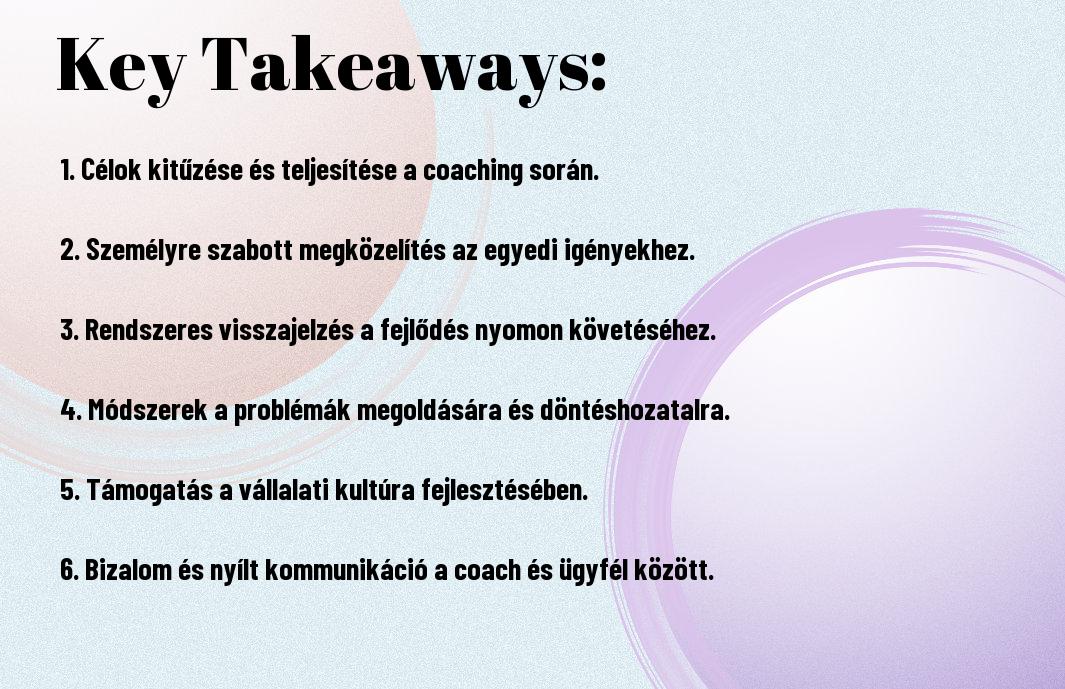
Key takeaways:
- During the coaching process, the coach helps the client to define and achieve their goals.
- The coach supports personal development through questions and feedback, encouraging reflection and solution finding.
- The relationship of trust established during coaching allows for honest dialogue, which contributes to more effective decision-making.
A Coaching Process
The coaching process is structured and targeted, enabling you to achieve the goals you have set. A coach is a partner who helps you to discover your strengths and opportunities for improvement. During the coaching process, by asking the right questions and using the right techniques, he or she will help you to see your situation more clearly and make the best decisions for your future.
Definition of Coaching
Coaching is an individual support process aimed at personal development and the search for effective solutions. A coach helps you understand your challenges and develop strategies to help you achieve success. Visit self-awareness and the goal-oriented thinking the building blocks of coaching.
The Coaching Phases
The coaching process can generally be divided into three main phases: survey, Design and Implementation. In the first phase, the coach will help you identify your goals and challenges, while in the second phase you will make concrete plans. And in the third phase, you apply what you learn in your daily life, reflecting on your plans.
The phases of coaching are inextricably linked. The first step, you can use the survey to find out about your own situation by using different tools and questions. This is followed by the Design, where you set specific goals and develop strategies to achieve them. Finally, in Implementation during which you apply your new knowledge, step by step, towards your goals, with the support of your coach.
What can you expect from a Business Coach?
An business coach help you achieve your goals and maximise your potential. During the coaching process, you will useful tool and techniques to help you develop your decision-making, leadership and communication skills. With the support of a coach rethink your strategies, and gain new perspectives that will contribute to your personal and business development.
Target Setting and Priorities
Goal setting is a key part of coaching. With the help of a business coach you will be able to clearly define set your goals and priorities to properly address the challenges you face. With the support of a coach you can focus on on the most important tasks, so you can move more efficiently towards success.
Knowledge and Experience
Business coaches have a wide range of knowledge and experience gained in different industries and environments. This background enables them to valuable insights provide insights into market trends and best practices. In addition, coaches often have management experience, which helps them to better understand your challenges and provide targeted help.
Benefits of Coaching
The coaching of many advantage to help you develop as an individual and as a company. During the coaching process personalised solutions to help you achieve your goals and gain a deeper understanding of your strengths and weaknesses. A professional coach can help you to more consciously plan for your future and take the necessary steps to succeed.
Personal Development
During your personal development, your coach will help you to discover your your inner motivations and achieve your goals. This will improve your self-awareness, and boost your self-confidence, thereby increasing your effectiveness in different areas of life.
Corporate Performance
Corporate performance through coaching can be significantly improvement as more effective communication between managers and staff can be communications can develop. Coaching helps teams to work in harmony and achieve common goals successfully.
When coaching becomes embedded in the corporate culture, it Innovation and the production levels may rise. With the support of coaches, teams are empowered to effectively manage conflict class, improve the their problem-solving skills, and increase overall job satisfaction. This can give companies a competitive advantage, as a targeted approach to coaching can Performance to a steady increase in.

Tools for Coaching
The coaching process involves a number of an effective tool are used to support your development and help you achieve your goals. These include methods and techniquesthat will help you reshape your thinking, as well as feedbackwhich can be decisive in the learning process.
Technology in Coaching
In modern coaching, the technology has become indispensable. Online platforms and apps allow us to easily reach our coach, anytime, anywhere. These tools speed up the communication and help them to develop.
Interactive Methods
Interactive methods play a central role in coaching, as they increase the active engagement of participants. These techniques allow you to learn through your own experiences and feelings, so your progress is much more personalised will be.
Interactive methods include exercises, group discussions and role-plays, during which in a creative way you can work on your problems. These approaches will not only give you the opportunity to share your experiences, but also help you to understand others' perspectives. Using interactive methods increases the depth of learning, so you can achieve your goals more effectively.
Who Needs a Business Coach?
A business coach is for anyone who wants to improve their performance, increase their results and achieve their goals. Whether they are entrepreneurs, executives or managers, coaching can help you open up new perspectives and make all areas of your work more effective. This will give you an excellent preparation for the challenges and opportunities that will lead to your development.
Entrepreneurs and Business Owners
If you are an entrepreneur or business owner, you are likely to face many challenges. A business coach can help you with in strategic thinking, in setting goals and future growth to help. The coaching process focuses on developing your business and achieving the results you want.
Leaders and Managers
For leaders and managers, coaching provides an opportunity to personal development and the management of their team to improve. The business coach will help you hone your leadership skills, communicate effectively and conflict management can also help you learn. The coaching process opens your mind to new solutions and strategies to help you improve your performance and motivate your team.
How to Choose a Business Coach?
When looking for a business coach, it's important to consider your choice carefully. The ideal coach will help you achieve your goals, but only if you choose the right one. Don't hesitate to ask about their previous experience, references and coaching methods to make sure you choose a professional who focuses on your needs.
Criteria for Selection
When making your selection, pay attention to professional background, the individual style, and coaching for certifications. Assess the coach's communication skills and understanding of your business needs. Trust and openness are essential for the coaching process to be effective.
The Right Coach Type
There are many types of business coaching, so it's important to find the right coach for you. Think about it whether you need a mentor, who can guide you with his experience, or a for a dialogue-oriented coach, who focuses on identifying your problems. Also make sure that the coach's style be in line with your own learning preferences.
When choosing the right type of coach, you should think about what is your focus and goals. If you want to improve your leadership skills, for example, you can take part in a leadership coach is the best choice for you. If you want to solve specific problems, such as conflicts within a team, you can use a conflict management coach is the best way to help. It's important that the coach's experience and style match your vision and the needs of your business.
A Coaching Folyamata - Mit Várhatsz Egy üzleti Coach-tól?
During the coaching process, it is essential to be clear about what you can expect from a business coach. A coach will help you to discover your hidden potential, support you in self-development and help you to achieve specific goals. By working together, you can develop personalised strategies to boost your performance and improve your decision-making skills. It's important to be an active participant in the process, as collaboration and openness to change are the keys to success.
FAQ
Q: What is the coaching process and how does a business coach work?
A: The coaching process usually consists of the following steps: first, an initial meeting is held where the coach and the client jointly define the coaching goals. This is followed by a series of regular sessions where the coach asks supportive questions and helps the client to explore their own solutions. Throughout the process, trust and openness are important to enable the client to self-reflect and develop. The coach supports the client through a variety of tools, such as feedback, exercises and strategies.
Q: What results can I expect after a coaching process?
A: After the coaching process, you can expect a number of results, such as personal and professional development, clear definition and achievement of goals, and improved decision-making skills. The coach can help you to better understand your strengths and weaknesses and find more effective ways of dealing with problems. Clients also often mention increased confidence and commitment to their work.
Q: How long does a coaching process take and how often do we meet the coach?
A: The length of the coaching process varies, usually between 3-6 months, but it depends on the client's needs and goals. The frequency of sessions is also personalised, usually weekly or fortnightly. Regularity in coaching is important as it helps to ensure continuous improvement and progress towards the goals set.