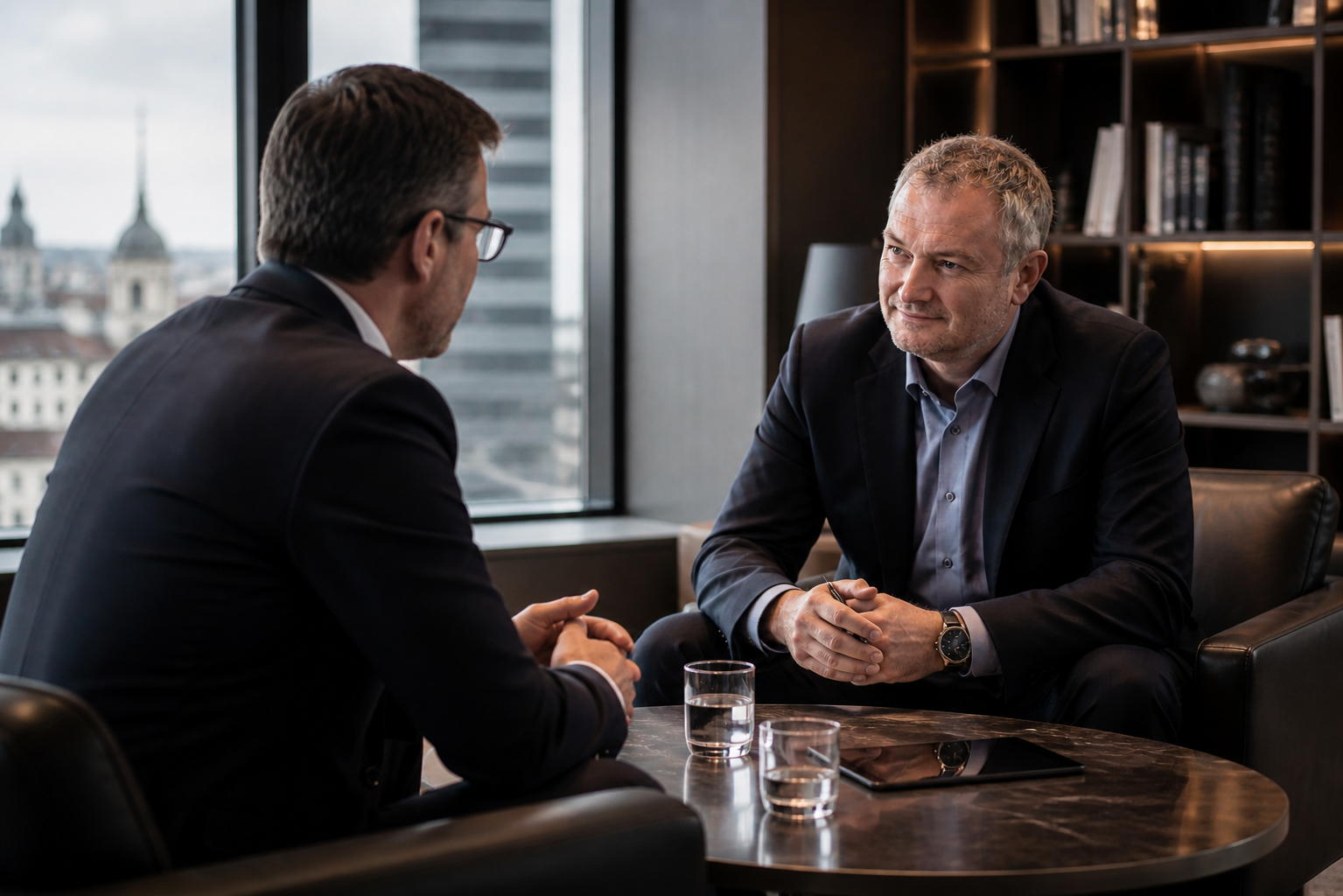
What is organisational development for? The answers that can change your company
Organisational development is the key to the survival of modern businesses. In this detailed guide, you will learn how to transform your company into a more efficient, innovative and competitive organisation. You'll find real cases, professional experience and practical steps.
When success became the biggest problem
Emlékszem arra a pillanatra, amikor egy 150 fős gyártócég tulajdonosa leült velem szembe, és így kezdte: "Tíz éve még büszkén mondtam el bárkinek, hogy családi vállalkozásként mennyire összeszokott a csapatunk. Ma már attól félek, hogy pont ez visz minket tönkre."
A cég fantasztikusan nőtt az elmúlt években, de ahogy bővült, úgy kezdtek el recsegni-ropogni a régi működési mechanizmusok. Az informális kapcsolatok, amelyek korábban erőt jelentettek, most gátolták az új emberek beilleszkedését. A döntések hetekig húzódtak, mert "mindenkit meg kellett kérdezni". A hatékonyság romlott, a fluktuáció nőtt, a munkamorál pedig zuhanórepülésbe kezdett.
This story is not unique - in Simon Sinek's style: this is the point where the why and the how there is a gulf between. They know why they do what they do, but have lost the plot on how to do it effectively.
What is organisational development really?
A organisational development (OD or Organizational Development) is a comprehensive, conscious process of looking at and developing the organization as a whole. It's not just training or team building - it's a systemic approach that addresses the organisation's structure, culture, processes and people.
What changes can we expect to see after successful organisational development?
Well planned and implemented organisational development leads to significant efficiency gains, a better working atmosphere, reduced turnover and ultimately more competitive and sustainable operations.
Definition of organisational development
Organisational development is a planned, long-term intervention to improve the efficiency, adaptability and health of an organisation. It is a process that draws on the findings of psychology, sociology and management science to help organisations perform better and operate more sustainably.
A CoachLab's experience of organisational development is built on three main pillars:
- Structural elements - szervezeti felépítés, szerepek, folyamatok
- Cultural factors - értékek, normák, kommunikációs minták
- Human resources - készségek, motiváció, együttműködés

What is organisational development for? The main benefits
1. Increasing efficiency and productivity
One of the most obvious goals of organisational development is to improve efficiency. But what does this mean in practice?
During organisational development:
- Uncovering waste - mind időben, mind erőforrásokban
- Optimising processes - megszüntetjük a duplikációkat
- Improving decision-making - gyorsabb, megalapozottabb döntések
- Increase automation - ahol ez célravezető
2. Developing conflict management and cooperation
"A szervezetekben a konfliktusok 85%-a kommunikációs problémákból ered." - Harvard Business Review, 2024
In organisational development, we not only address the overt conflicts, but also uncover the hidden tensions that can undermine the organisation in the long term.
What is organisational development good for in conflict management?
- Improves communication culture
- Develops a constructive debate culture
- Strengthens empathy and understanding
- Reduces personal conflicts
3. Change management
A mai üzleti környezetben a változás az egyetlen állandó. A artificial intelligence, az automatizáció és a digitalizáció nem tűri a hagyományos szervezeti modelleket, ezért a szervezeteknek folyamatosan alkalmazkodniuk kell.
Organisational development helps:
- To prepare the organisation to the changes
- Reduce the resistance for innovation
- Speed up adaptation to new circumstances
- Developing a learning culture
4. Talent retention and recruitment
Retaining good professionals is an increasing challenge in the Hungarian labour market. Organisational development can help:
| Before that | Then go to |
|---|---|
| High fluctuation (25-30%) | Reduced fluctuation (8-12%) |
| Difficult recruitment | Attractive workplace brand |
| Low commitment | High employee engagement |
| Stressful working environment | A supportive culture that encourages progress |
5. Increasing innovation capacity
One of the most valuable benefits of organisational development is the creation of a culture of innovation. This is particularly important in today's competitive environment, where rapid adaptation and innovation are the key to survival.
How does organisational development increase innovation capacity?
- Encourages experimentation
- Reduces fear of making mistakes
- Promotes creative thinking
- Improves cross-functional cooperation

For whom is organisational development recommended?
Companies in a growth phase
If your company is growing fast, organisational development will help you to sustain that growth. Structural problems grow exponentially with the size of the organisation.
Organisations undergoing change
- Mergers and acquisitions in case of
- When introducing a new strategy
- Technological transformation during
- Generational change at the time of
Companies with performance problems
If your organisation:
- Not reaching the targets set
- Deteriorating efficiency
- Communication problems
- Faced with high turnover
...akkor a szervezetfejlesztés segíthet feltárni és megoldani a gyökérproblémákat.
Proactive management teams
The most successful organisations do not wait for problems to arise, but proactively improve themselves. This approach always pays off in the long run.
What results can you expect?
The results of organisational development are mostly 3-6 months but the full effect of the effects will start to show during the 12-24 months unfolds during.
Short-term results (3-6 months)
- Improving communication
- Decreasing conflicts
- Clearer roles and responsibilities
- Increasing motivation
Medium-term results (6-12 months)
- Measurably better performance
- Decreasing fluctuation
- Improving customer satisfaction
- More effective decision-making
Long-term results (12-24 months)
- Sustainable growth
- Innovative culture
- Strong organisational identity
- Competitive employer brand
According to the Harvard Business Review 2024 study, 70% of companies participating in organisational development projects achieved significant improvements in leadership and business results.
The process of organisational development: how does it work?
1. Diagnostic phase
All successful organisational development starts with a thorough situation assessment. This includes:
- Organisational culture survey - értékek, normák, szokások
- Process analysis - hatékonyság, bottleneck-ek azonosítása
- Human resources audit - készségek, motiváció, elégedettség
- Structural analysis - hierarchia, szerepek, kommunikációs csatornák
2. Design phase
Based on the diagnosis, a detailed development plan is drawn up:
Setting SMART targets:
- Specific (concrete)
- Measurable (measurable)
- Achievable (available)
- Relevant (relevant)
- Time-bound (time-bound)
3. Implementation phase
Different methods are used in the implementation:
- Trainings and workshops
- Coaching and mentoring
- Process optimisation
- Cultural development
- Change in organisational structure
4. Evaluation and maintenance
A projekt nem ér véget a bevezetéssel - folyamatos monitorozás és finomhangolás szükséges.
Common mistakes in organisational development
1. door disqualification
Organisational development takes time. If you expect a quick solution, you will be disappointed.
2. Partial commitment
If only middle management supports the project but not top management, it is doomed to fail.
3. One-sided approach
A szervezetfejlesztés holisztikus megközelítést igényel - nem elég csak a folyamatokat vagy csak a kultúrát fejleszteni.
4. Lack of communication
Employees need to know why the change is happening and how it will affect them.
When is it not worth starting organisational development?
There are situations where organisational development is not the right solution:
- Acute financial crisis in case of
- Significant staff changes amid
- Unstable external environment
- When there is no committed leadership
The challenges of the digital age
The rise of digitalisation and artificial intelligence brings new challenges to organisational development. From our experience at CoachLab, we see that companies that are doing well are those that:
- Proactively prepare for technological change
- They invest in developing the digital skills of their employees
- Developed by a culture of hybrid working
- Encouraged continuous learning
Types and methods of organisational development
Structural organisational development
- Reorganising the hierarchy
- Redefining roles and responsibilities
- Optimising decision-making processes
- Establishing communication channels
Cultural organisational development
- Shaping values and norms
- Developing your leadership style
- Strengthening team cohesion
- Developing a motivation system
Technological organisational development
- Support for digital transformation
- Introduction of new systems
- Automation and optimisation
- Data-driven decision-making
Tips for successful organisational development
- Start with small steps - ne akard egyszerre mindent megváltoztatni
- Involve employees - ők ismerik legjobban a napi problémákat
- Communicate regularly - tartsd tájékoztatva a csapatot a fejlődésről
- Measure and evaluate - csak azt lehet javítani, amit mérünk
- Be patient - a valódi változás időt igényel
Costs and return on organisational development
The cost of organisational development varies, but is usually influenced by the following factors:
- Organisation size (10-50 persons: HUF 2-5 million, 50-200 persons: HUF 5-15 million)
- Complexity of the project
- Duration (6-24 months)
- Use of external consultants
However, the investment is usually between 200-400% is recouped through increased efficiency, reduced turnover and increased revenue.
Your partner for organisational development
A CoachLab Coaching Services team has over 25 years of leadership and 10 years of coaching experience. We have led many successful organisational development projects in different industries and organisational scales.
Among our services you will find executive coaching, organisational development, and sales coaching areas.
If you want to find out more about other coaching providers, we recommend coach-kereso.hu platform, where you can find the best professionals in the domestic market.
Conclusion
Organisational development is not a luxury, but a necessity in today's business environment. Companies that proactively develop their organisations can gain a significant competitive advantage. The key is a holistic approach, patience and consistent implementation.
The question is not whether is it necessary organisational development, but that when will you start. The sooner, the greater the long-term benefits.
To find out more about the possibilities for organisational development or to request a personalised offer, visit CoachLab's our website, or visit the blog in our other articles.
Frequently Asked Questions
How long does it take to see the results of organisational development?
The results of organisational development are gradual. The first positive changes usually take 3-6 months (improved communication, reduced conflict), while deeper, structural changes take 12-24 months. Patience and consistent implementation are needed to achieve full impact.
For what size of companies is organisational development recommended?
Organisational development can be useful for companies of all sizes, but is particularly recommended for organisations with more than 20 people, where more complex relationship and structural problems can arise. For smaller firms, targeted coaching and team development may be the right solution.
How to measure the success of organisational development?
The success of organisational development can be measured by several indicators: increased productivity, reduced turnover, improved employee satisfaction, faster decision-making, fewer conflicts and improved business results. It is important to define specific, measurable objectives (SMART) at the beginning of the project.