Hello! Based on my experience with the right coach can be key to your personal development. If you've been thinking about it for a long time but don't know where to start, don't worry! The following tips will help you to avoid the most common pitfalls, make sure that the coach you choose is really your needs focus and achieve your goals together. Armed with this knowledge, you can enter the world of coaching with confidence!
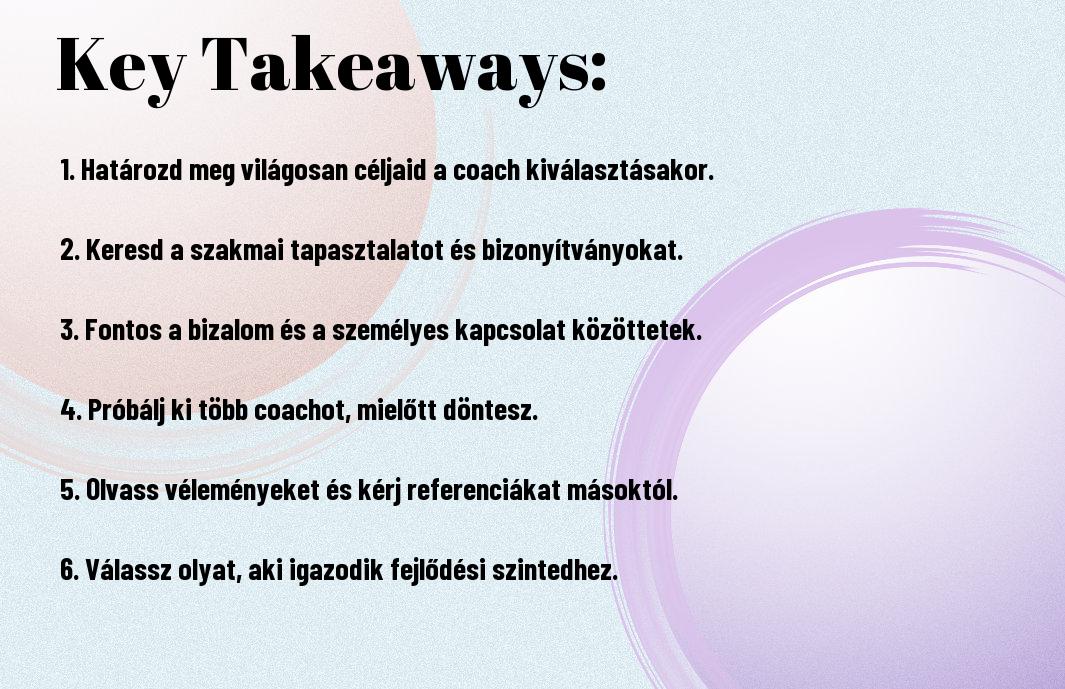
Key takeaways:
- It is important to choose the right coach, taking into account experience and area of expertise.
- During the interview it is worth asking questions to understand the coach's methods and philosophy.
- For beginners and advanced coaches alike, it is useful to make sure that the coach's style and goals are in line with their own development needs.
First Steps to Finding a Coach
The first step in finding a coach is always to define your goals. This is where you decide what you want to achieve in the coaching process. It is important to be clear about your expectations, as this will help you to choose the right professional who can best help you in your personal or professional development.
How to Set Your Goals
When you start setting your goals, it's important to think honestly about what you want to achieve. Write down your your specific goals and set a deadline to motivated by stay. Don't be afraid to dream big, because coaching is exactly what will help you achieve them. Visit self-awareness development is also key here.
What You Need to Know About the Different Coach Types
The different types of coach offer a wide spectrum and it is important to know that you are choosing the right one for your needs. There are life coaches, career coaches and business coaches, each offering support in a different area of expertise. It's worth doing your homework find out more different approaches to find the one that works best for you, as this will have a big impact on your coaching experience.
Knowing the differences between coach types is essential to make the right choice. The life coach for example, focuses on your personal development and relationships, while career coach help you plan your professional path. Visit business coaches develop entrepreneurial skills and strategies. It is therefore important to consciously reply, and decide based on your goals, because this will determine the success of your coaching process.
Coach Screening Questions
When choosing a coach, it is important to think carefully about your screening questions. Ask yourself what your goals are and what skills you need to achieve them. Before you talk to coaches, get a clear idea of what you expect from them so you can best assess their answers.
Where to Get References
One of the best ways to evaluate coaches is to ask them for references. Ask people you know or check online reviews. Visit live references can help you to get a true picture of the coach's work and style.
Which Questions to Ask During Interviews
Az interjúk során fontos, hogy olyan kérdéseket tegyél fel, amelyek a coach tapasztalatait és módszereit célozzák meg. Kérdezd meg: "Mik a legnagyobb sikerei?", "Hogyan dolgozol a klienseiddel?", vagy "Milyen módszereket alkalmazol a fejlődés érdekében?" Ezek a kérdések segítenek megérteni, how the coach can help you in your life in concrete ways, and whether your views fit with the coach's approach. Don't be afraid to dig deeper, it's your development!
The Coach-Client Relationship
The relationship between coach and client is key to successful development. This relationship is based on trust, openness and communication, allowing the client to share their feelings and goals while the coach can guide the process in the right direction. A good relationship supports learning and development, so you both work together more effectively.
What Skills to Watch Out For
When choosing a coach, look for the professional experience and the communication skills. A good coach knows how to communicate effectively the information and know when to ask questions to best support the client throughout the process. The right skills will help to ensure that your development process is smooth.
The importance of fit
Matching, i.e. harmony between coach and client, is essential for success. If you are in line, you can work together more easily, and the coaching process more effective will be. Good communication, according to my blog, simplifies the learning process and allows for creative solutions.
The match between coach and client is not only a matter of personal affection but about the alignment of values and objectives is. If the coach's style and philosophy are in line with your values, then More motivated you will be to follow his instructions. That's why you should consider your choice carefully and check that the coach really meets your needs and expectations. The right fit will provide additional support and encouragement for your development.
Evaluation of the Coach
When evaluating a coach, it is important to take into account the your communication skills and the its motivational power. It's worth checking how much it helps you achieve your goals and how relevant its advice is to you. If you feel that you are not making progress or that the coach is not getting the best out of you, you may want to look at other options.
How to Assess Progress
You can easily measure your progress using various indicators, such as achieve the objectives or the personal development weighing up. You can create a diary to keep track of your experiences and feedback from your coach. By regularly assessing your progress, you can more easily identify what is working and what is not.
When to Change
You may need a change if you don't feel comfortable with your current coach be motivated, or for any reason you are stagnating. It's important to acknowledge when their methods don't fit your needs or you don't get the results you expect. A proactivity key, don't be afraid to take action to improve.
If you find that your progress has slowed down or you no longer feel you are making progress, you should think carefully about whether the coach you are working with is still the right choice for you. When making a change, make sure you choose a coach who better fit to your needs and help you achieve your goals. Don't hesitate to decide, because your progress is the most important thing!
Tips for beginners
Entering the world of coaching can be daunting, but don't worry, I'm here to help! To start, it's important to define your goals and identify what you expect from coaching. Don't be afraid to ask questions and take the time to research different styles. The first step is to be brave and step out of your comfort zone and experience new things!
How to Get Started in Coaching
Getting started in coaching is always exciting but also challenging. First, find a coach who is in tune with your personality and goals. Make a list of questions so that when you meet, you know what you want to address, so that you can easily focus on the issues that are important to you during the coaching session.
Finding the Right Mentality
In order to participate effectively in the coaching process, it is essential that I am the right mentality to develop. This includes openness and the flexibility, but the positive thinking is. I know it's not always easy, but if you can see an opportunity behind the challenges, you can get much closer to your goals. The right mentality can help you overcome your fears and kick start your progress, so dare to believe in yourself!
Tips for Advanced
If you are already an experienced coach, it is important to keep improving your skills. Don't be afraid of new challenges! Learn from other professionals, attend workshops and find mentors who can help you develop.
How to Improve Your Coaching Knowledge
To further develop your coaching skills, you should regularly carry out a self-assessment, and ask for feedback from your clients. This will help you to spot areas for improvement. Use online courses and books to broaden your horizons.
Exploring new techniques
The discovery of new techniques gives us the opportunity to a fresh perspective offer your customers. It's worth trying different coaching styles and methods that can help to increase your effectiveness. Unleash your creativity and look for ways to strategiesthat best suit your own coaching style and the needs of your clients.
A Legjobb Coach Választásának Titkai - Tippek Kezdőknek és Haladóknak
Overall, it is important to consider your own needs and expectations when choosing a coach. I have also found that open communication and trust are key to successful collaboration. Don't be afraid to ask questions and do your research to find the best person to support you in achieving your goals. I believe that with the right coach, your progress will be faster and more enjoyable, making you more confident in your own journey.
FAQ
Q: Why is it important to choose the right coach?
A: Choosing the right coach can be key to your personal and professional development. A good coach will not only provide guidance, but also support and motivation to help you achieve your goals. The coach's style, experience and areas of expertise are important aspects to consider in order to build an effective working relationship.
Q: What characteristics should you look for when choosing a coach?
A: When choosing a coach, you should consider the following characteristics: professional background, experience in the desired field, coaching style and communication skills. Also, it is worth looking at his or her methods and ability to tailor sessions to individual needs. A good coach is able to listen empathetically and help clients discover their own strengths.
Q: How can we measure the effectiveness of the coaching process?
A: The effectiveness of the coaching process can be measured in several ways: by setting goals and monitoring their achievement, by feedback from the coach, and by self-evaluation. It is important to continually assess progress during meetings and adjust goals if necessary. Open communication between coach and client is essential for the success of the process.